AKASHVANI SANGEETH SAMMELAN 2015

AKASHVANI SANGEETH SAMMELAN 2015
At Chinmaya Mission Auditorium, New Delip

Tuesday, March 04, 2014

VARANASI - VIDYA, VEDA and VAADYA


The last two weeks of December 2013 should count as one of the high points of our lives.  We made a trip to Varanasi (Kashi), combining a personal family yatra, a Dikshitar pilgrimage with some of our students, and a few concerts which sprung up out of nowhere, just as though they were destined to happen.

Bump into anyone in Varanasi and get talking, they will tell you “Ved and Sangeeth are the two eyes of Bhagwan Shiv, and since Kashi Vishwanathji resides here, there is music and veda chanting everywhere.” Seriously, any lane you walk through around the ghats, you can hear some mantra ghosham. The fact that there is music in the air everywhere is exemplified by this one incident which blew us off.  We were just walking up the stairs on the banks of the Shivala Ghat after a holy dip in the Ganges. We were shivering due to the cold weather, and were in a rush to head back to the mutt to finish our puja. We heard in the background some superlative vocal music, the raag shankara being sung to perfection.  We couldn’t move an inch, mesmerized as we were with the notes floating in the air, the sight of the river on a chill winter morning with the sun trying to peep out, all adding to the divinity of the atmosphere.  We thought it must be one of those lucky classical musicians getting to do his riyaz on the banks of the Ganges early in the morning, but no! The local accompanying us told us that he was a boatman and would randomly compose on Lord Shiva and sing everyday in this manner. Our jaws dropped!  

Sarnath, Burmese Buddha Temple

Rabdi, doodh, kachori, jalebi, masala chai, litti chokha, chaats, yum! Kshirsagar mithai shop was our daily destination.  Not to forget the Banarasi paan.  There are as many cows and buffaloes in the streets as there are people. Rickshaws, fresh vegetables and fruits heaped on thela gadis, cars – you name the brand and the model – it is there, rows and rows of shops displaying Banarasi sarees, and temples in each and every micro and mini lane are some of the unforgettable sights of Kashi.
Roadside chat shop!


The first couple of days were spent focusing on our personal task at hand in Kashi.  We then caught up on our agenda and first visited the Triveni Sangam. The boat ride was great. You can actually make out the difference in colours of the Ganges and Yamuna when you reach the Sangam spot, as also the difference in their turbulence. There is a very nice sahasralinga temple established by the Kanchi Mutt at the entrance to the Sangam. There is also the temple of Hanumanji in a sleeping position in the Sangam, probably the only one in this pose. We also visited Sarnath and some of the Buddhist temples therein
Benaras Hindu University, Dept of Performing Arts

The subsequent day was spent in singing of the Kritis Dikshitar has composed in the sanctum sanctorum of the deities in Kashi, i.e., Kalabhairav, Visalakshi and Annapoorni.  Sri Dikshitar’s song Gange Mam Pahi was sung by us when we were on the boat on the way to the Dasashwamedha Ghat to witness the magnificent Ganga Arti. While on the Ghat, we sang our Paramaguru Ananthakrishna Iyer’s composition Sheethalambam Sada Bhajeham in praise of the deity Sheethala situated on the banks of the Dashashwamedha Ghat.
There was more to come….
Dashashwamedha Ghat, Sheetala Temple is the Red Building

We had carried our portable veenas from Chennai just to practice during our free time in the hotel room. The panditji who was in charge of doing all the pujas for us came to know that we had brought our veenas and asked us if we could perform at the Kashi Vishwanath Temple if he did manage to arrange a concert. Our joy knew no bounds. To play seated in front of Lord Vishweshwar, what more could one ask for? The security arrangements in the Vishwanathji mandir are very, very strict. They do not even allow a pen inside. But as a special case by the grace of God we were allowed in, and played a concert for an hour and a half. It appears there has never been a music concert inside the Vishwanathji temple! It has not yet sunk in that we are the first to have had the privilege. We silently bowed down our heads and thanked our Gurus and parents who have made us what we are, and all our wellwishers for keeping us in their thoughts. We had a Darshan of the Lord from up close and did abhishekam of rose water and honey especially carried from Chennai for this purpose, and also gave vastram to the Lord. We sang the kriti “Shri Vishwanatham” of Sri Muthuswamy Dikshitar in the raga Bhavani, as we performed the abhishekam. We were also honoured to perform a concert at the Chakralingeshwar Temple in Hanuman Ghat, where the Samadhi of Chidambaranatha Yogi, the guru of Muthuswamy Dikshitar himself, is located. The other concert we played was at the Sri Dattatreya Prasad Ashram, that of a Mauni Baba who we believe had not uttered a word for 40 years, for the welfare of this earth.  

Performing at Chakralingeshwar Temple
Chakraligeshwar, Samadhi of Chidanandanath Yogi
Varanasi to the onlooker would not be visually a very clean place, far from it in fact! It would really help for the administration to work on this aspect. But, talk about it being spiritually uplifting, it is like no other place in the world. The sight of the expansive Ganges and the strains of Indian Classical Music and the Vedas are enough to take you to a different plane altogether.

It is said –
“ Darsanaat Abhrasadasi , Jananaat Kamalalaye, Kasyantu Maraananu Muktih, Smaranaat Arunachale.”
'To see Chidamabaram, to be born in Tiruvarur, to die in Kasi, or merely to think of Arunachala is to be assured of liberation.  
One must go to Kashi to realize what it has to offer to one’s inner peace…It is better experienced than articulated.

Friday, August 24, 2012

ORU IRAVU IRUKKAI


We had been wanting to visit the grand Mani Mandapam of MahaPeriyava for quite sometime.  And it finally happened on July 28, 2012 when we were asked to play a concert there as Anusha Nakshatram fell on that Day (Anusham is Mahaperiyava’s Birth Star). Orikkai is a very beautiful serene place and the mandapam stood as an architectural marvel. It has been constructed out of just one kind of stone (granite) like other ancient temples of the chola period, without admixture of other materials. The temple has a 100 feet vimana, the mandapam has 100 pillars and each of these pillars has been carved out of one single stone.  There are elephants (again carved out of a single stone) in the front, and wheels on the side giving the impression as though the temple is a chariot being drawn by the elephants. A lifelike majestic vigraham of Mahaperiyava is housed inside a rudhraksha mandapam, and padukas of Mahaperiyava are also present.  One can feel His presence perpetually in the sanctum sanctorum.

The carvings in the temple are brilliant. There are relief works depicting the Acharya Parampara, , the Pradosha Thandavam, the Navagraha on the roof with stone chains hanging; all sculpted out of a single stone.

Legend has it that Thirumazisai Alwar and the gurubhakthi of his shishya made the Lord leave Thiruvika and spend a night at this place thus giving the name oru iravu irukkai!

Here is the full story from the Manimandapam website:

The legend is a moving one. Thirumazhisai Alwar who worshipped the Lord of Thiruvekka majestically reclining on his serpentine bed, was cared for by a couple. When the son Kanikannan was born to them, he became the Alwar's steadfast devotee. One day when Kanikannan saw a woman frail and bent with age, sweeping the temple premises offering worship to the Lord, he was moved. He stroked her hunched back in appreciation. The power of his guru surged into him and the woman regained her youth and was able to continue offering worship to the Lord with fresh vigour. The king of the period who greedily desired his youth restored to him requested Kanikannan to do so. But the youngman refused outright which enraged the king and he banished Kanikannan from his kingdom. The Alwar prepared to go with him and asked Lord Thiruvekka also to come too, as he could not live without Him. The Lord rolled up his serpentine bed and obediently followed the Alwar and Kanikannan. The three travelled some distance way from Kancheepuram on the northern bank of the Paalaar river and stayed the night there. But,with the Lord's departure, the town was plunged in darkness and disorder. The ruler realized his mistake and rushed to the trio, seeking their forgiveness. The Lord returned to Kanchi with his devotees. The place where he stayed overnight came to be known as Oriravu irukkai, which later got shortened to Orirukkai.

Now about our experience there….it was the calmest place you could ever get to play the veena, with Umayalpuram Mali expertly accompanying. The main piece we played that day was Sri Subramayaya Namaste, the majestic Dikshitar composition in Khamboji about which Paramacharya has given a vast commentary. We chose not to prefix or suffix this magnum opus kriti with manodharma aspects. Just the song, as a respectful tribute to the Nadamadum Deivam and the Great Saint Muthuswamy Dikshitar.  We finished our concert and were given prasadam of thayir sadam. The humble curd rice has never tasted as good as this for as long as one could remember.  With our souls and stomachs satiated, we were just preparing to leave, when we heard someone singing inside the sanctum sanctorum.  Jeyaraaj came up with a brilliant idea.  He requested the priest permission to allow me to sing a kriti that yours truly had recently composed on Muthuswamy Dikshitar but was still thinking about how when and where to present it the first time! It was a huge blessing to present the composition sitting before the idol of the Paramacharya. 

Given below is the sahityam of this humble creation (lyrics ratified for grammatical correctness by our own Asthana Sanskrit Scholar Rajani Arjun!!):

Kriti:  Mudduswaaminam guruvaram
Ragam: Hamsanandi
Thalam: Misra Jati Triputa

P: mudduswaaminam guruvaram namaamyaham
    uttara dakshina sangeetha samanvaya swarupam

A: itihaasa puraanaadi upanishad saaram
    raagalakshana saram paramadvaita saaram
madhyama kala:
vainika gayaka shreshtha naadaanubhava saccidaananda cidaananda aanandanubhava

C: samskrita bhasha priyam digvijaya priyam
nutana paashchaatya swarasaahitya pradam guruguhapriyam
madhyama kala:
sri ganesha narayana panchabhoota kamalambika abhayambika neelotpalambika sharanam
hariharaputra ramanjaneya ramaa vaani navagraha dwisaptadi raga devata sharanam

All in all, July 28, 2012 was a memorable day as it was spiritually very satisfying to play a veena concert in the Mahaperiyava Shatabdi Manimandapam, and also the opportunity to do an "arangetram" of one's own composition in front of the Paramacharya’s idol. Felt truly blessed……

(Pic sourced from http://indiatempletour.blogspot.in)

Sunday, November 06, 2011

A HUMBLING PRIVILEGE


Do excuse our temerity to put this picture up here….but we could not help share this rare privilege that the author of this book has given us. “Let’s Know Music and Musical Instruments of India” is a book authored by Madhumita Dutta. It is a nice book giving an account of musical instruments used in India. This page is featured in the chapter “String Instruments”.

Just to tell you a small story, on a visit to London, we went to watch a play. An Englishman sitting beside Jeyaraaj noticed the deep cuts on his index and middle fingers and asked if he played the sitar. He told him we both played an instrument similar to the sitar called the Veena. He said he enjoyed Indian Classical Music and enquired if we had heard Pandit Ravi Shankar live. When we answered in the affirmative, he replied “What a privilege!” We would now like to tell him that the most humbling privilege in our life is THIS…. “To be on the same page” with one of the greatest ambassadors of Indian Classical Music that our country has ever produced and ever will!!

Friday, August 12, 2011

TRIBUTE


Carnatic Music became a hugely poorer and sadder world with the utimely demise of Chingleput Ranganathan Sir on July 12, 2011. Our association with him began in 1994 when at the suggestion of our Guru Anantharama Iyer, we met him and started learning pallavis from him. A very conscientious teacher and a perfectionist to the core, Ranganathan Sir's classes would go on for nearly two hours, especially when 8-kalai and 4-kalai pallavis would be taught. He was one of those who believed that neraval was a very important constituent of carnatic music concert presentation, particularly in pallavis, and his methodical approach towards the art of singing neraval in three speeds in all its expansivity was mindboggling. He was a complete musician and a musician's musician. The richness of pathantara can be experienced from the sangati oriented kritis like Nee daya kalgute (Reetigoula), Nee daya ravale (thodi), Kalinerula (Kuntalavarali), Mari mari ninne (Kambhoji), Ye papamu (Atana) and many more, which he taught us with utmost passion. He composed tillanas in all the 35 talas. It goes without saying that we were very fortunate to have learnt from him, and blessed and privileged to have been associated with him and the family for almost two decades. A mahavidwan, a legendary teacher and a great person.

Gurus are equal to, or even greater than, God himself; and this fact is best described in this Doha of Sant Kabir:

Guru gobind dou khade, kaake laagoon paaye
Balihaari guru aapne jin Gobind diyo bataaye

Pranams to his lotus feet. May his soul rest in peace.

Thursday, April 07, 2011

VEENA TAPASVINI NO MORE


It is a sad day for carnatic music today, as Kalpakam Swaminathan, a true veena tapasvini, has left this world. Eight decades of veena playing and teaching has now become a memory. She was the first student of our guru's father Brahmasri Ananthakrishna Iyer, and the last link between him and our generation, after the passing of our Gurus A Anantharama Iyer and A Champakavalli. Not only did she have a vast repertoire of Dikshitar Kritis, she had also mastered the compositions of many other composers.

Humble, endearing, and always smiling. We shall forever hold very close to our heart the fond memories of our interactions with her (she would always introduce us to her students saying, "iva ellam ennoda school"). She would talk nothing else but music. We have had the proud privilege of hosting her concerts. Her gracious presence for some of our veena concerts and those of our disciples will always remain our most cherised blessing.

Monday, April 04, 2011

VIEWPOINT - MERA BHARAT MAHAN?

India has won the World Cup in Cricket. There is euphoria all around. The entire nation is unable to think of any other matter of interest.

People have been talking about Dhoni's leadership qualities. I think there is something there for all of us to be inspired about in our profession. His graciousness, his ability to move away fom limelight, his ability to bring the best in people, his mental strength in doing what he believes in despite public pressure (the whole world wanted Ashwin - he brings in Nehra and Sreeesanth. Dhoni went public saying he misread the pitch - I dont believe it one bit! He was just fooling us! He wanted the discussion to die down! That is clever!) In the corporate world where leadership is a big factor - we can surely use Dhoni-like qualities.

Now for the obnoxious part! I understand winning the World Cup is something special. But why is so much of National Wealth going to only a handful of people? This is national property - our wealth damn it! This is not correct!

Why not give something to Leander Paes and Bhupathy - they are the World No.1 doubles tennis pair you know! Why not our sportspeople who got us Olympic medals? They need it and need it badly!

Lifelong AC 1st class pass for the cricketers from Indian Railways! Why not for our musicians?Do we know how difficult it is to be a full time musician? When it comes to giving a petrol pump to late Ustad Bismillah Khan (Bharat Ratna - a real jewel in India's crown) it is turned down! Now cores of rupees are given as bonus to cricketers! This is just politics! Are all professions encouraged by the Indian Government? Do our poliicians know what it is to be a good musician or a good architect or a good painter or a good writer who can fashion a million minds? Is there a place under the sun for achievers in other spheres? I seriously doubt it! Ah! this attitude! This hurts! Is this a governmernt that wants to take the nation forward.... We have no means to look at the problem in the eye and resolve them -we want cricket diplomacy to solve indo-pak issue! Juvinile! Pathetic!

Why do we go to such ludicrous extent of going to living rooms of circketers and talking to mothers, sisters and relatives? See how the Sri Lankan crowd has handled its disappointment! See how Japanese people have handled tragedy! That is called maturity! When will get there? Will we ever have a sense of equanimity in handling good and not-so-good situations?

Can we do something about this? Can we contribute in a small way to see how We as Indians move to a more matured world?

Friday, March 25, 2011

PADMANABHA SASTRY AWARD FOR ARTS


The family of HR Padmanabha Sastry confers the Padmanabha Sastry Award for Arts every year on musicians. This year we were chosen for the award.
HR Padmanabha Sastry was a renowned music director of Telugu and Kannada movies. He was the first Telugu films music director and composed the music for the first ever Telugu talkie film "Bhakta Prahlada" released in 1931. Our thanks to Smt and Sri HP Ramamurthy (eminent tabla player and son of Late HR Padmanabha Sastry) and their family for this gesture. The function was held on February 27,2011 at Dakshinamurthy Auditorium, Mylapore and the chief guest was senior flute Vidwan Prapancham Sitaraman (disciple of the great Flute Mali).

Tuesday, February 22, 2011

THE DESERT SAFARI

Back from a refreshing concert-cum-sightseeing 5-day trip to Dubai.

First things first. We played a concert for Indian Fine Arts, Dubai on February 18th. The organizers took great care of us, and the event itself was very well put together. Full house crowd. The concert went for three hours. We were accompanied by senior local mridanga vidwan Sri Govindarajan and Sriraam Subbaraman, seasoned Kanjira player also residing in Dubai. As such wherever we do play, we like to present music that is completely classical, and it must be said that in Dubai the crowd was quite knowledgeable, and we did not need to dilute the contents of our presentation. Thank you Indian Fine Arts, Dubai for having us, and of course for the lovely flowers which stayed fresh for the rest of our trip in our room.

About the sightseeing, it was the usual stuff...Dubai Mall, Gold Souk, Museum, Burj Khalifa (the world's tallest building), Burj Al Arab (where Federer and Agassi played a game on the helipad), the desert safari etc. The tremendously impressive landscaping throughout the city....green grass everywhere, flowers.....how do they do it in a desert? Mind boggling. And such clean roads. Also learned that the Dubai branch of a South Indian hotel had to shut down for sometime after the Dubai Municipality guys found a cockroach somewhere in the premises, and this was grossly below their hygiene standards.

What made the trip truly special was the fact that we were able to connect with old friends from music class and school, people we had not met for the last 15-20 years. Most of us reconnected over Facebook. And it was amazing, reliving old memories, chatting about the good old days. It was fantastic!

Posting some concert pictures here. Courtesy, again, a wonderful friend!

Friday, July 09, 2010

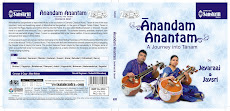
About "ANANDAM ANANTAM" - A Journey Into Tanam

JOY ALL THE WAY, says THE HINDU. Click Here for the entire review.


Manodharma Sangeetham or improvised Music is the touchstone of Carnatic Classical Music. Tanam is one of the most important, lively and bewitching aspects of Manodharma Sangeetham. In the genre of Ragam Tanam Pallavi, Tanam is sung after the Raga Alapana and before entering into the Pallavi. It is also called Madhyamakalam or Ghanam. Though there is no specific time measure (Tala), a perceptible rhythm prevails. Traditionally while singing Tanam, the words ANANDAM and ANANTAM are skillfully interwoven into rhythmic patterns. Tanam is a specialized field in the Veena tradition. It has an extraordinary charm and appeal when played on the Veena.

This product features Tanam played by us in 18 exquisite Ragas, some common, some uncommon and some very uncommon. Not only is this product a ready reference for Tanam singing or playing, its appeal is intended to be universal and could be a wonderful gift to a loved one for any special day.

We would be failing in our duty if we did not thank Sri Pradeep Chakravarty, whose idea it was that we record tanams in various ragas. In fact most of the ragams have been chosen by him. Thanks also to Vedanth Bharadwaj for being the perfect sound engineer. And last but not the least Smt Mala Mohan and others at Swati Soft Solutions for putting this together.

"ANANDAM ANANTAM" was released by Smt Veena Kichlu, Managing Trustee of Pandit Ravi Kichlu Foundation on 27th June at Birla Academy of Art and Culture, Kolkata. The event was organized by Guruguha Sangeeth Sammelan of Kolkata. Vidushi Veena Kichlu's presence as Chief Guest for the CD release was memorable for a very significant reason. Her husband, a highly respected and noted Hindustani Classical Singer, Late Pandit Ravi Kichlu was instrumental in bringing out our very first audio release with HMV, titled VEENA DUET, in the year 1992. It was wonderful that she could come and stay back to listen to our concert that day.

Anandam Anantam is a 2ACD pack, available now in leading music stores and also can be bought online through Swati's website - Click Here. We sincerely hope you will add it to your collection. Please do write to us and let us know your thoughts. The list of ragas on each CD is given below.

Disc - 1
1. Hindolam
2. Keeravani
3. Mandari
4. Kedaram
5. Huseni
6. Atana
7. Bahudari
8. Chitrambari
9. Navroj

Disc - 2
1. Bhairavi
2. Yagapriya
3. Balahamsa
4. Dhanyasi
5. Arabhi
6. Vegavahini
7. Mohanam
8. Nadanamakriya
9. Bageshri

Tuesday, June 15, 2010

BACK TO THE PAST


Was rummaging through some old papers and found this! An invite for our CD release function in the year 2000, as well as copy of Mudhra Newsletter featuring us. This CD called "Subramanya" comprises of some select compositions of Muthuswamy Dikshitar on Lord Muruga. This CD probably is not available in the stores any more. We have put up some of the tracks on our website www.veenajj.com. The music from the entire CD is available for download through the link given below.

PS: Of course, we have subsequently changed the way we spell our names!! Everything else remains the same!

Click here to download "Subramanya"

THE NEWSLETTER PUBLISHED IN OCTOBER 2000

Friday, April 23, 2010

RECOGNITION FOR EX-CALCUTTANS

We all respect our elders, and our admiration for them increases when they achieve such feats as to make themselves shining examples for generations to follow………… the happiness is manifold when they are people who you have known closely. It gave us great pleasure and a tremendous sense of pride to see the front page articles in The Hindu Friday Review, on two people who we have known since our Calcutta days. First up, Smt Bhuvana Natarajan, Bhuvana mami to us, who has been honoured with the Sahitya Academy award for Tamil translations of Bengali works, in particular of Asha Purna Devi. Amazing! And just today The Hindu Friday Review carried an article on Sri N Gopala Sundaram, who has translated the entire Tiruppugazh in English, and this has been brought out in the form of a book titled “The Glory of Lord Muruga.” We are sure to get Gopal Mama’s autograph on our copy.


Please see below the links to the respective articles:
Grand Culmination
Stupendous Work

Monday, March 15, 2010

THEMATIC CHAMBER CONCERT


A Thematic Chamber Concert was presented under the auspices of our organization Veenavaadhini, based on the Bhooloka Panchalinga Krithis of Muthuswamy Dikshitar. All the Kritis, representing the five elements i.e. space, air, fire, water and earth were sung and played by us on the veena. Sri Trichur Narendran accompanied us on the mridangam. Rajani Arjun Shankar provided word-by-word meaning and narration to each of the krithis. The background comprising of paintings of the great genius Late S Rajam, pictorially depicting each of the kritis, were made by Aparna Shankar. The two-hour programme consisted of the following kritis:

1. Ananda Natana Prakasam – Kedaram – Akasha Kshetra (SPACE)
2. Sri Kalahastisha – Huseni – Vayu Kshetra (AIR)
3. Arunachalanatham Smarami – Saranga – Agni Kshetra (FIRE)
4. Jambupathe –Yamuna Kalyani – Appu Kshetra(WATER)
5. Chintayamakandamula – Bhairavi – Prithvi Kshetra(EARTH)

The Hindu, Mylapore Times and Kutcheribuzz carried a byte about the programme. It was well attended and well received, and we are enthused to present more of such programmes in the near future. We thank all the rasikas for having attended the concert and making it a big success. And thanks Arjun for the pictures, and Parameswaran and Latha for video recording the event!

Given below are reactions from some rasikas who had attended the programme:

"I attended the chamber concert and it was really memorable. A dedicated presentation by the vainika-s. Special mention must be made of Smt Rajani's commentary which gave lot of insight into the supreme compositions of Dikshitar. It was a n excellent idea to have veteran S Rajam's paintings (of Panchalinga) in the background.

The efforts put in by JJ to internalise the kritis and presenting them authentically in Veena, was quite evident in their rendering.
Trichur Narendran's Mridanga support was something special and enhanced the aesthetic appeal.

I rate this among the best thematic concerts of the season!"

-----------------------------------------------------

"The narration, AlApanA-s, tani, and, above all, kRti renditions that adhered to MD sampradAya, were all excellent. It was especially pleasing to listen to chintayamAkandamUlakandam in grand chowkam, with the first line ending on M rather than the usually-encountered version."
-----------------------------------------------------

"It was a very nice concert. In fact, with narration and posters about each piece, it was a whole project rather than just a concert. Everyone had put in a lot of work for the benefit of the listeners.

Each piece was in a slow speed, making a contemplative atmosphere for the entire performance. Trichur Narendran never made any effort to hurry things along, but contributed to the mood perfectly.

The program was well attended, with the room being full, but not uncomfortably so; just right.

As a note of curiosity: not one song was in Adi Talam, which must be a very rare event. Misra, Khanda and Rupaka talams were represented."

-----------------------------------------------------

"A wonderful evening wherein everything fell in place. Jaysri's Yaman Kalyani alapanai was superb and was within the framework of Jambupathe. Jeyaraj played a lovely Bhairavi preceding chintayamAkandamUlakandam and also a brief tanam. Smt Rajani Arjun Shankar's narratives were well researched and crisp. Trichur Narendren is a class apart. His accompaniment was apt for the occasion and considering the fact that all the kritis were slow paced, he controlled the pace admirably."

Saturday, February 27, 2010

ARTICLE IN "AMUDASURABHI" MAGAZINE


Anuradha Kannan of Podhigai TV fame recently authored an article for the reputed Tamil Magazine AMUDASURABHI titled "Karuviyum Kalaingargalum," featuring various carnatic artists and their relationship with the instrument they played. We were asked to write about our bonding (more appropriately, obsession!) with our veenas. Given below is our writeup in English from which has Anuradha interpreted the piece for the article.


VEENA AND US

Ever since we remember, music has been a part and parcel of our lives. During the impressionable stage of our lives, we had been exposed to music steeped in aesthetics and classicism.

Veena has had a revered place in our families and hence it was no surprise that we decided to take up the instrument as a vehicle for our musical expression.

Due credit should go to our revered teachers who have given us a completely unique perspective of the mother of all instruments – the Veena.

To us this instrument has ceased being an inanimate object for long. It is our best friend and it actually “talks” to us every day. It seeks constant pampering. If we fail to practice for a day, there is a sense of discomfort when we play on the instrument the next day. It feels as if the instrument seeks not to respond to our touch!! It needs coaxing and cajoling before it starts responding.

However when we are stressed or troubled, it is our Veena that we turn to. During such times of distress, playing the Veena gives us a lot of comfort and restores equanimity and peace. Surprisingly, under such stressful conditions, it is our friend that sympathizes with us; it needs no coaxing at that point. Playing the Veena becomes a completely de-stressing activity and the environment is filled with positive energy.

When you have such a friend, one would like to increase its tribe. Not surprisingly we have acquired a number of Veenas over the years, and many of these acquisitions can be aptly described as “impulsive”. But we have no regrets in indulging in such an impulsive act!!

Each instrument that we have is very, very special. Our music room is filled with a variety of Veenas, mostly the Tanjore variety. We have indeed built a family of Veenas.

There is one particular Veena that was presented by a music connoisseur for a token amount of Re 1. It is a Tanjore Veena and is more than a century old. It is embedded with ivory strips and the Veena has a unique tonal quality of its own. We are very partial towards this instrument and do not encourage anyone to touch the same. It is only available as a visual treat. Such is our attachment to Veenas that our possessiveness leaves our kith and kin, often, a trifle embarrassed!!

The need for enhanced sound and portability made us look to avenues whereby we could use electronics in a more purposeful manner. In this endeavor, we found great enterprise in Radel Electronics, who have created the Sunadavinodini, an electronic and portable version of the Saraswathi Veena. We have been using this instrument for our concerts in India and abroad. The public response has been very positive and we have had a number of impromptu Q&A sessions on this with members of the audience, particularly from the overseas communities.

However, when we play in solitude in our prayer room we use the original acoustic veena(without the contact mike) but for a concert, as professionals it is our duty to ensure that the clarity and volume of sound reaches every nook and corner of the auditorium and for us the electronic veena has been a boon.

Though we keep indulging in our hobby of collecting veena there are some identified ones which are handled specifically by one of us. They are more a personal possession and are seldom used by the other - not even during practice. This brings more familiarity to the instrument. We are not comfortable with outsiders touching or playing our instruments but we do make an exception for our own students and allow them to play on some of our Veenas especially during concert engagements.

Our Veenas are our treasure. There is an inextricable bond. Veenas, by design, are very fragile and one needs to spend a lot of time and care in keeping them clean and in perfect tune. They demand a unique sense of responsibility from you. Not a single day goes by without our realizing how much our veena has enriched our life, right from bringing us together as life partners, to giving us the opportunity to serve the cause of Carnatic music in our own small way. It thus goes without saying that our Veenas are and will always remain our best friends forever.

Jeyaraaj and Jaysri

Wednesday, January 13, 2010

OBITUARY


January 5, 2010 was one of the saddest days for the carnatic community. Veena Vidwan Trivandrum Venkataraman died in a car accident. He was one of the all-time great vainikas. For a man of such great vidwath and capabilities, he was a very humble and unassuming person indeed. Everytime we met, he would treat us with a lot of warmth and a personal touch that was very unique to him. We will definitely miss him. Even as we write this, we are still to come to terms with this cruel act of fate. He received the Sangeetha Kala Acharya this year from the Music Academy just a few days before his death. May his soul rest in peace. Our deepest condolences to his family and his sishyas.

Friday, November 13, 2009

VEENA FASHIONISTAS?

We consider ourselves lucky for having got an opportunity, 15 years ago, to settle down in Chennai. Understandably so, since purely from the Carnatic Music performer's perspective, this has always been the place to be. And, we have come a long way, from those times of fighting our disillusionment on the veena scene in the then Chennai concert circuit, to now, where almost everyday a veena concert is happening somewhere in the city. What we need now is to gather more momentum and keep it going. There should be more people coming to listen to veena concerts not because "they feel the need to do their bit to encourage veena players" but purely because they feel this is what they would like to hear on a particular evening. The onus is very much on us to take it to that level. Aural pleasure is important. In the days of yore, veena was the only instrument known, so it might have enjoyed great monopoly. But now, there are so many more, which with their volume advantage are capable of instantaneously connecting with the average rasika. The veena losing out to the violin as an accompanying instrument is a case in point here. As vainikas, we also have another humungous responsibility....to preserve the gamaka-laden purity of carnatic music for which veena is the singular point of reference, particularly when it comes to Dikshitar Kritis. Over and above is the size of the Saraswathi veena, which itself daunts the organizer (who may be laden with the responsibility of transporting the artist and his/her veena from the airport, etc). He is probably thinking whether getting a van/truck to carry the instrument is worth the effort, or should he settle down to arrange some other concert which requires less paraphernalia. We have heard mridangam vidwans telling us that they have had real tough times lifting huge veena boxes while on overseas trips with lady veena artists!

In the past few years we have found a reasonable solution to these issues. We have been using the electronic veena. We are happy. We have not had to sacrifice the "vadya dharma." We have not felt the need to play something that we do not want to, just because it "sounds good" and instantly makes the average rasika connect. People in the audience do not have to guess what we are playing. They can hear. The mridangist does not have to tone down his volume to inaudible levels so as not to drown the music of the veena. We can carry/transport our instruments to anywhere in the world without much ado. All this ....... not because it is "modern" or we are some "veena fashionistas"..... but only because we want more people to be able to comfortably hear what is being played, not having the necessity to compromise on what is deemed classical, with the hope that not just "veena rasikas" but "all rasikas" of Carnatic Music can identify with music produced on the veena and connect with it. Clearly, we are using the option because it is available now, and it wasn't earlier.

Reproduced below is our letter published in The Hindu Friday Review as a rejoinder to a few lines published in a recent review of a young veena artist's concert. Also is given the link to our interview for Radel's Newsletter on our thoughts on the electronic veena and other related topics.

THE LETTER

Veena’s tonal quality

This is with reference to the review of Bhavani Prasad’s veena recital (Friday Review, September 4). We refer to a section where the writer has expressed the desire to see the traditional Saraswathi Veena being used increasin gly on the concert stage. The sound produced by a Saraswathi Veena is undoubtedly unparalleled in terms of melody. However, this is true only if the veena is used in its pristine form (i.e. no contact mike). The moment one uses a contact mike, the sound is no longer a result of its resonance from the hollow of the ‘kodam.’ It may be interesting to note that two veenas using the same microphone may produce a sound that may be as different as chalk and cheese. We are yet to see a perfect contact microphone that highlights the right tonal qualities of a Saraswathi Veena, with the exception of perhaps the instrument used by the great Vidwan S. Balachander. To reach out to a large audience, we have turned to the electronic veena as sufficient amplification is possible without much ado; tonal quality can be fine-tuned to suit the artist’s need; in case of a duet, the tonal representation of the two veenas is similar; and, the instrument can be easily transported.

Jaysri and Jeyaraaj

Chennai

The Radel Newsletter Interview - Click Here